It appears that incidents are occurring in this country regularly. We’ve seen a plethora of incidents at schools, synagogs, shopping centers, and restaurants just to name a few under attack. What are some things that can be done or skillsets that can be enhanced to combat some of this? We all know that nothing is 100% but something is better than nothing when you’re aware of your surroundings. An ounce of prevention is better than a pound of cure.
Situational awareness is about knowing what is going on around you. This requires you to continuously watch out for what is going on in the environment. However, you can’t pay attention to every single detail. Instead, you need to focus on those elements that are important to achieve a certain task or objective.
A few things that can make a difference in surviving or getting yourself out of a situation are to be mindful and practice being in the moment. That can be accomplished when you are cognizant of your surroundings and your senses are all fully engaged. Identify exits and watch people without staring. Be able to recognize nonverbal cues. Limit your distractions and trust your gut feeling. Lastly, be strategic. Doing this will get you out of unwanted situations.
Furthermore, situational awareness is the foundation for good decision-making. Situational awareness is formed by observing and understanding what is happening in your environment, in the context of how time is passing. That understanding is then used to make predictions of future events.
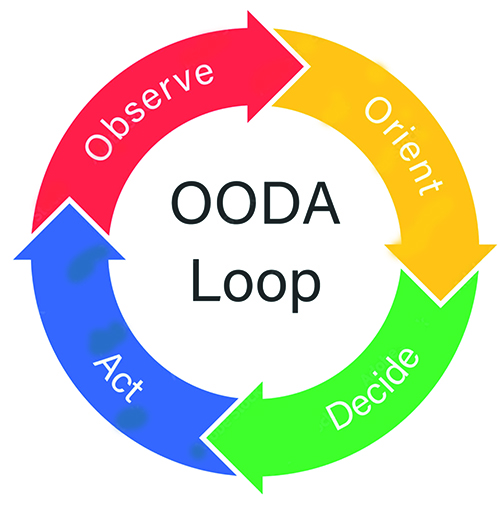
Lastly, The name of the game is survival so we have to keep our heads out of our apps. Being observant, oriented, deciding, and acting (OODA) loop is key to survival. The OODA loop encourages decision-makers to think critically, anticipate threats, and neutralize them before they become critical. Organizations use the OODA loop to benchmark their ability to react, with the attendant goal of continuously improving their decision cycles.